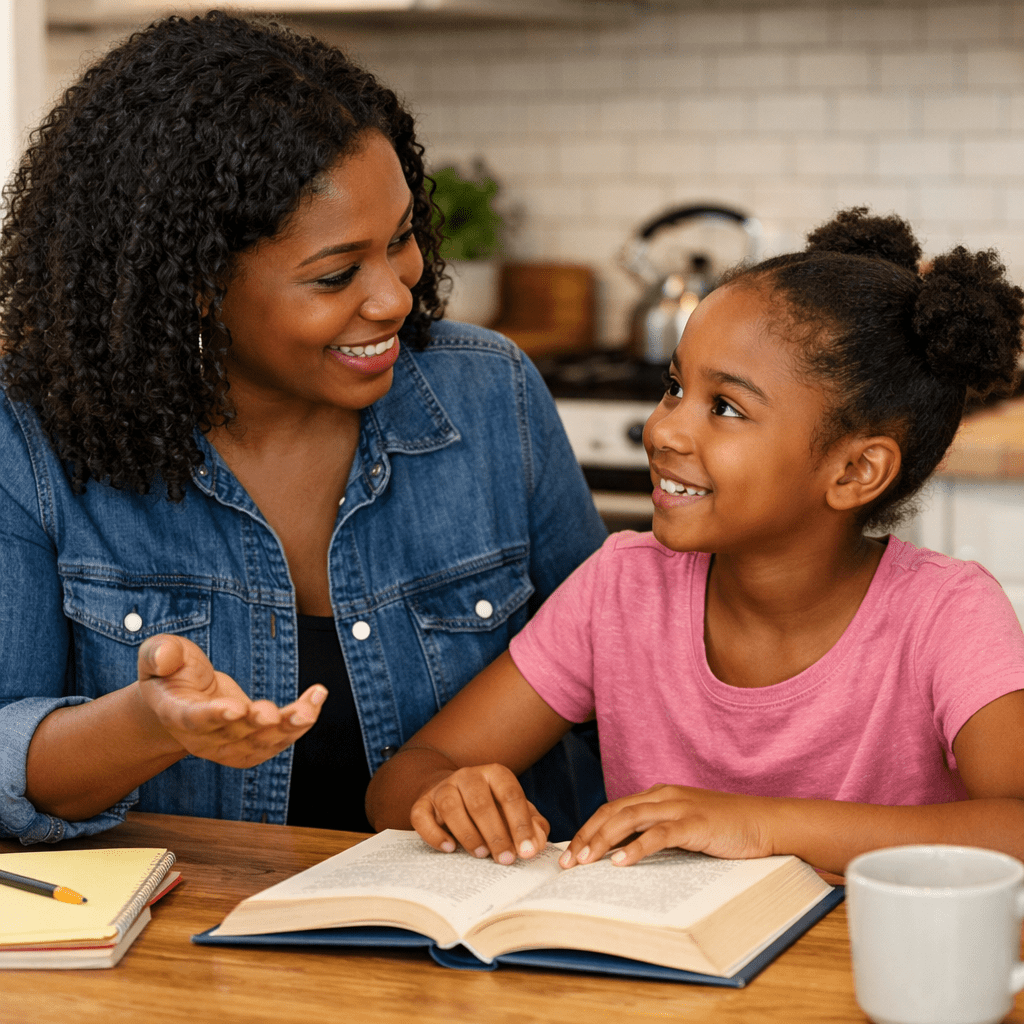
With the winter break over and everyone getting back into school routines, I wanted to share some homework tips for reading at home to finish the school year strong. When parents ask how to help with homework, especially reading homework, they often worry about doing it “right”. Saying the “right” things. Correcting mistakes. Making sure their child is “on level.”
Here’s the truth: Effective homework help isn’t about having the right answers; it’s about supporting thinking.
One of the most powerful things you can do at home is talk with your child about what they’re reading.
Homework Help Through a Science of Reading Lens
Comprehension is one of the 5 foundational pillars of reading. The Science of Reading tells us that reading comprehension is not automatic. It develops when children make meaning from text, connect ideas, and think deeply about what they read.
As simple as these sound, this type of thinking and the strategies for comprehension success need to be taught to children.
Decoding matters. Fluency matters. Vocabulary matters.
But comprehension is the goal, and comprehension grows through conversation.
When you pause during reading and ask open-ended questions, you are strengthening your child’s ability to make predictions, draw inferences, connect ideas, and monitor understanding.
These are comprehension strategies teachers teach in classrooms (hopefully explicitly through modeling), and they can happen naturally at home, too.
*Check out my article on teaching thinking for reading and modeling comprehension strategies: Teaching Thinking for Reading: What Research Says and What Teachers Can Do (Article Linked)
What Homework Help Isn’t
Let’s start by naming what homework help does not have to be:
- Correcting every mispronounced word
- Rushing to finish the assignment
- Turning reading into a test or performance
If homework time feels stressful or pressured, comprehension and motivation will suffer.
What Homework Help Can Be
Homework help can look like:
- Curiosity instead of correction
- Conversation instead of compliance
- Support instead of pressure
You don’t need to be a teacher to support literacy.
You just need to ask good questions and create space for thinking.
Open-Ended Questions That Support Comprehension
Before Reading
These questions activate background knowledge and prepare the brain for meaning:
- What do you think this story will be about?
- What do you already know about this topic?
- What clues do you notice on the cover, title, or chapter titles?
During Reading
Pause naturally; there’s no need to stop on every page:
- What’s happening right now?
- Why do you think the character did that?
- Does this remind you of something you’ve seen or experienced?
- What do you think will happen next?
After Reading
These questions deepen understanding:
- What was the big idea of this story?
- What surprised you?
- What lesson do you think the author wanted us to learn?
There are no “wrong” answers here.
The goal is thinking, not perfection.
What Reading at Home Can Look Like by Grade Level
Kindergarten – 1st Grade
- Picture books are perfect
- 10–15 minutes of reading each night matters
- Read aloud to your child or read together
- Pause and talk, even one or two questions help
2nd – 5th Grade
- Chapter books work well and are ideal
- Take turns reading pages or paragraphs
- Pause after a chapter to:
- Make predictions
- Clarify confusing parts
- Talk about characters’ choices and motivations
Read with intention. Intentional reading builds comprehension.
Why This Also Matters for Culturally Responsive Teaching
Culturally responsive teaching is recognizing the identities, experiences, and knowledge that children bring with them to every reading moment.
When you ask questions like, “Does this remind you of something in your life?”, “Have you ever seen this happen before?”, or “How is this character similar to someone you know?” You honor your child’s experiences as an asset. Leveraging children’s assets in reading boosts motivation and confidence while reading.
These connections:
- Increase engagement
- Strengthen comprehension
- Help children see themselves as readers
Reading becomes more than a school task. It becomes personal, meaningful, and affirming.
A Reminder for Parents
You are not expected to turn your home into a classroom (unless you’re homeschooling).
You are already doing something powerful by:
- Sitting beside your child
- Listening to their thinking
- Making time for stories and conversation
My little one is two, and she already loves curling up to read together. I ask her questions—some beyond her current understanding—but she still responds in her own way. I affirm every answer and observation she makes, and you can see how much it excites her.
Consistency, fostering curiosity, and strengthening connection matter more than the “right” answer. This is where real learning and confidence in reading grow.
If you’re looking for ways to support your child’s confidence and reading identity at home, check out our affirmation book designed to remind children that they are capable, thoughtful, and powerful learners both in and out of school: Little Believers, Big Dreamers: Affirmations that nurture confidence, courage, and joy in every child
You can also check out our Complete Summer Reading Packet, which includes book lists for K-2 and 3-5 readers, discussion questions + follow-up activities aligned with the book on the list, graphic organizers, and so much more! Use coupon code HOMEWORKHELP for 25% off! https://payhip.com/b/YqfLV
Follow us on Facebook!
(Amazon affiliate links were used in this post)
 Literacy for Justice
Leave a comment